
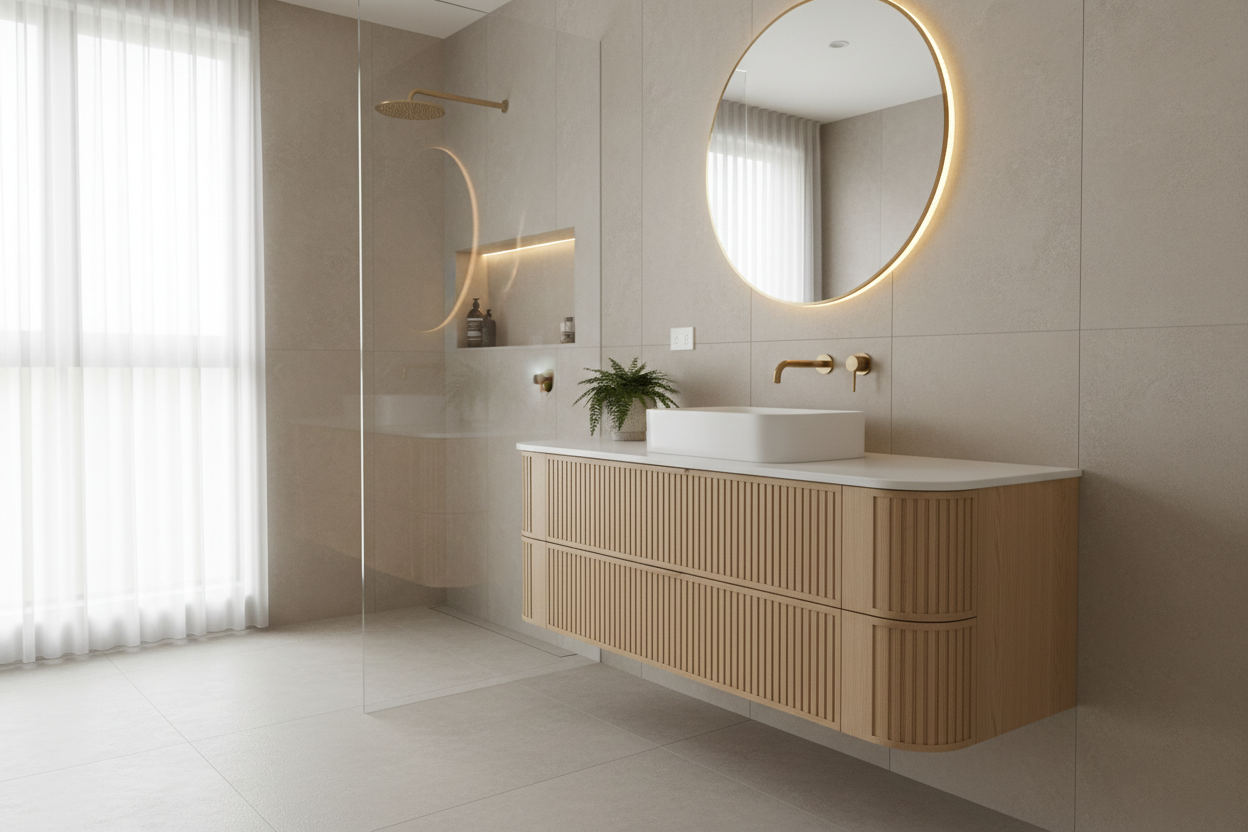
Many homeowners love the clean look of a wall-hung vanity — but one practical question comes up almost immediately:
Will the plumbing cost more?
The honest answer is: sometimes slightly, but not always. In many renovations, the plumbing work is similar to a floor-standing vanity — it simply depends on what’s already in place behind your current vanity.
Why Wall-Hung Vanities Can Seem “More Expensive” to Plumb
Wall-hung vanities often suit a more minimal style, which usually means:
-
less visible pipework
-
a cleaner wall line
-
more emphasis on neat finishing
Because the plumbing is less visible, people often assume it must require major rework. In reality, most of the “cost difference” comes down to whether your renovation is already opening walls and moving services.
When Plumbing Costs Are Often Similar
Plumbing costs are often very similar to a floor-standing vanity when:
-
you’re already renovating and walls are being opened
-
your plumber is already doing a rough-in and relocating outlets
-
waste and water points are close to where they need to be
In these cases, concealing the plumbing for a wall-hung vanity is typically part of the normal renovation process.
When Plumbing Can Cost a Bit More
You may see some extra cost when:
-
existing pipework sits too low or too far forward
-
the waste outlet needs to be repositioned for drawer clearance
-
the wall is staying closed and the vanity is being swapped only
Even then, the difference is usually modest — and it’s less about the vanity style and more about the condition and location of existing plumbing.
If You Don’t Want to Change Existing Pipework

If altering the existing pipework isn’t practical, a builder can often conceal the plumbing by forming a slim service wall (a small boxed wall/cavity) behind the vanity. When designed properly, it doesn’t look awkward — it simply looks like a clean, intentional wall line.
This approach can be a practical option in some renovations, especially when the goal is to avoid reworking major pipe runs.
A Simple Tip That Keeps Costs Under Control
To avoid surprises:
-
confirm your vanity height early
-
finalise basin and waste positions before rough-in
-
coordinate with your plumber before waterproofing and tiling
The biggest cost increases usually come from late changes — not from choosing a wall-hung vanity.
Plumbing layout is closely linked to tapware choice. Our Mixer vs Wall-Set guide explains how different tap styles can influence plumbing layout and finishing.
Vanity size also plays a role in plumbing clearance. Our Vanity Size Guide covers how cabinet dimensions affect waste positioning and drawer space.
Final Thoughts
Wall-hung vanities don’t automatically mean higher plumbing costs.
In many Australian bathroom renovations, plumbing work is comparable to floor-standing vanities when planned early. Any extra cost is usually due to existing site conditions — not because wall-hung vanities are “harder”.
Explore our range of wall-hung bathroom vanities here:
👉 https://horabathrooms.com.au/collections/wall-hung-vanities